
Do you already have NFTs, or are considering buying some? If so, then make sure you’re aware of the tax rules related to these 'non-fungible tokens'. Whether or not you need to pay tax on NFTs depends mainly on your individual behaviour as an investor.
An NFT – or to use the full name, a non-fungible token – is best described as a digital certificate of ownership. It’s a contract that establishes who owns a specific piece of digital content or digital art.
Photos, text, music or video footage are all forms of digital content that can be linked to an NFT. And, as with any form of art, its value depends on what the market is willing to pay for it.
NFTs became more widely known not too long ago when Jack Dorsey, the co-founder of Twitter, sold his very first tweet as an NFT for an astronomical sum. In this case, the NFT is the digital contract that establishes ownership of the tweet.
This digital content is offered for sale on NFT marketplaces, such as OpenSea, for example. In the NFT world, euros are not much use, as these tokens are bought and sold using cryptocurrencies, such as Ethereum.
The ownership of your NFT is guaranteed via a blockchain. In very simple terms, a blockchain is a public database where anyone can verify your ownership of an NFT, without being able to make any changes to the token, or certificate. Hence, its ‘non-fungible’, or non-replaceable, nature.
NFTs are still fairly new, but the rules are already starting to get a bit clearer. The question of whether your NFT profits are taxed or not depends on your individual investor profile.
As we’ve seen, there are several possible scenarios, some of which are more favourable than others:
As a small investor with a limited number of NFTs, you would of course prefer to be considered a prudent investor. You don't have to declare your NFT profits, but make sure you can prove your prudent investor profile if you get a visit from the taxman.
If you have a lot of NFTs and make a substantial profit from them, then you no longer fall into the prudent investor category, and you have to pay tax. In this case, check in advance which profile best reflects your activity, and take the necessary steps to ensure you declare the income correctly.
As we’ve explained, there are different ways to declare capital gains on NFTs, and this depends on your investor profile.
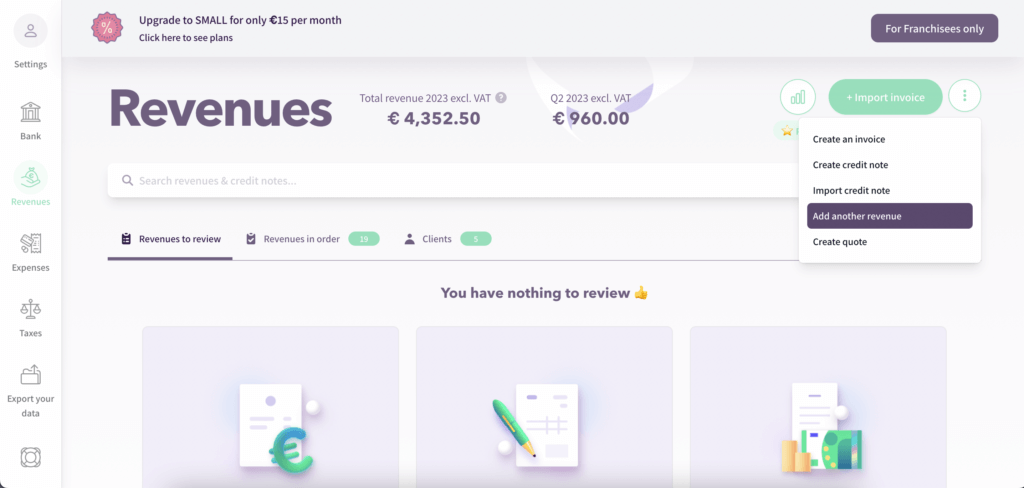
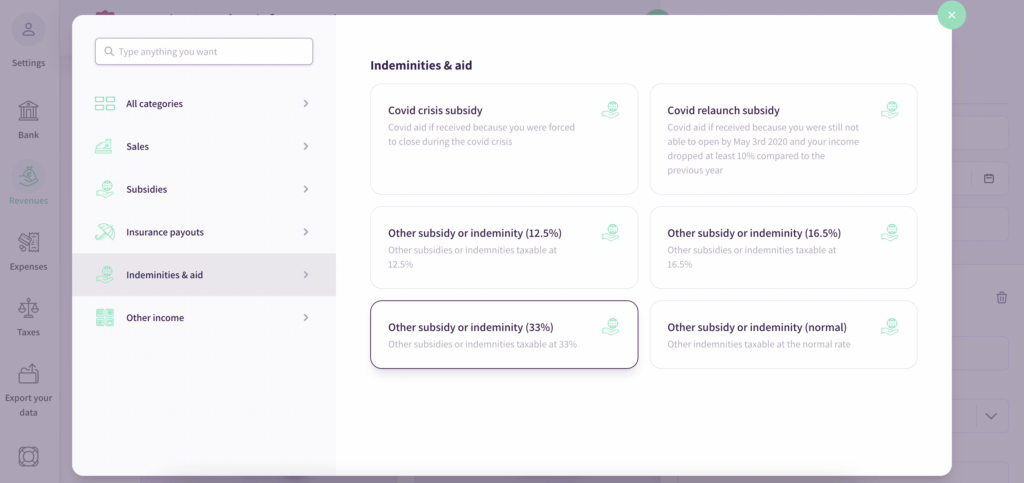
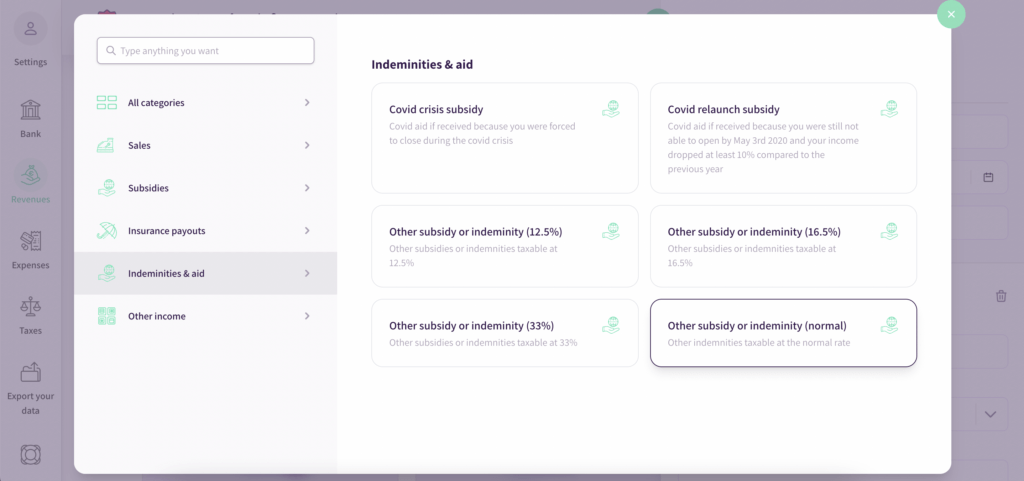
This income will then be taken into account in your personal or corporate income tax declaration, depending on the form of your business.
Whether you’re a prudent investor, speculator, or professional trader, Accountable helps you correctly declare your NFT income. Best of luck with your investments!

Author - Valesca Wilms
As content marketing lead at Accountable Belgium, Valesca writes about freelancing, self-employment, and taxes based on her own experience as a freelancer.
Who is Valesca ?Thank you for your feedback!
Useful
As a self-employed individual with a sole proprietorship, your income is taxed under the personal in...
Read moreStarting from 2026, all self-employed individuals will need to send their invoices electronically in...
Read moreThe VAT reverse charge is a complicated word for a simple concept. It helps you purchase and sell sm...
Read moreLe suivi par mail de votre service est appréciable. J’ai été étonné de devoir communiquer mon no de compte bancaire et surtout de donner un accès consultatif à celui-ci. Mais je vous l’avais déjà évoqué en vous précisant la raison. Bien cordialement François Bellière
Anonyme
la qualité des conseils donnés
Maël Fraipont
Très bien, disponibilité !
Daniel Mpoy Mukeba
C’est hyper clair et le service est impeccable, vous répondez vite. La seule chose que j’ai remarqué qui pourrait être une nouvelle fonctionnalité: avoir la possibilité d’être plus précis au niveau de la détermination de ce qu’on paye pour nos cotisations sociales quand on a choisi un plan d’apurement. Par exemple, 300€ par mois au lieu que le choix soit juste par trimestre.
Patryk Borkowski
The coaching session on tax management was excellent, good material, excellent explanations and very insightful…my accountant and tax advisor are good, but never so comprehensive and accurate. Combined with the AI I never feel alone with Accountable
Sergio Barbarino
La rapidité de la réponse et l'efficacité
Véronique Rochet
Super snel en correct geholpen!
Jean-Charles Tibbaut
Le contact avec l'equipe ! On n'a pas affaire à un chat avec un robot stupide qui ne comprend rien mais avec des humains et un vrai dialogue
Freddy Carrette
altijd snelle, vriendelijke en professionele service. Ook al heb ik door gebrek aan activiteit weinig gebruik kunnen maken van uw diensten. Gisteren heb ik het contract opgezegd, en ook dat is heel vlot verlopen. Waarvoor dank.
Luc Kupers
The availability of your team to help and guide people to understand their finances better is what really makes Accountable valuable. While the AI is able to give answer to most of the basic questions, specific scenarios need counsel from a human which your team performs beautifully.
Sofiya Bogdan Neves